Does Marble Need to Be Sealed? The Truth for Chess Sets, Serving Boards & More
If you have just bought a marble homeware piece — or are considering buying one — the question of sealing will come up. The answer is: it depends on the piece and how you use it. Here is the honest breakdown.
What Does Sealing Do?
Marble sealer is a penetrating liquid that fills the microscopic pores in the stone's surface, creating a barrier between the marble and whatever it comes into contact with. A sealed surface is more resistant to absorbing liquids, stains, and pigments. It does not make marble indestructible — acidic spills will still etch a sealed surface — but it buys you more time to clean up spills before they penetrate.
Pieces That Benefit from Sealing
Kitchen accessories (serving trays, coasters, mortar & pestle, cake stands): These are in frequent contact with food and liquids. Sealing once a year with a food-safe marble sealer is genuinely beneficial. It makes daily care easier and significantly reduces the risk of permanent staining from cooking oils, wine, and fruit juices.
Bathroom pieces (soap dishes, trays): Constant water exposure makes sealing worthwhile for bathroom marble. Use a standard (not food-safe) marble sealer and reseal every 12–18 months.
Pieces That Do Not Need Sealing
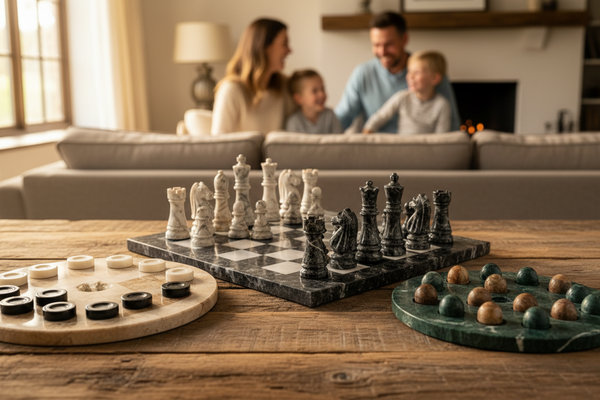
Chess sets and game boards: Chess boards and pieces are display and play objects — they are not in contact with food or liquids during normal use. Sealing is unnecessary and adds no benefit for these pieces.
Office and desk accessories (pen holders, bookends, paperweights): These are not in contact with liquids during normal use. A simple wipe with a soft dry cloth is all the maintenance they need. Sealing is not required.
Decorative objects (candle holders, vases, sculptures): Unless a vase is being used with water, decorative marble objects do not need sealing. Clean with a dry or slightly damp cloth.
How to Seal Marble at Home
If your piece does benefit from sealing, here is the process:
- Ensure the marble surface is completely clean and dry
- Apply a thin, even coat of marble sealer with a soft cloth, following the product instructions
- Allow to penetrate for 10–15 minutes
- Buff off any excess sealer with a clean, dry cloth
- Do not use the piece for 24 hours while the sealer cures
Food-safe marble sealers are available from kitchen supply stores and online. Repeat the process annually for high-use kitchen pieces, every 18 months for bathroom pieces.
How to Tell if Your Marble Needs Re-Sealing
Drop a few drops of water on the surface. If the water beads up, the sealer is still effective. If the water is absorbed quickly and darkens the stone, it is time to reseal.
For a complete overview of marble care by product type, visit our Marble Care Guide. Shop our full Kitchen & Dining collection — free shipping on orders over $200, and use code ARTREE10 for 10% off your first order.
Ready to bring this into your home? Explore Artreestry's full handcrafted marble collection.
Shop the Collection